Quick answer: A bathtub to shower remodel replaces an old tub with a walk-in shower in the same footprint. In Jacksonville, most conversions cost about $8,000 to $20,000 depending on tile, glass and plumbing changes, and the work itself usually takes 1 to 2 weeks, plus lead time for custom glass. It is one of the most requested bathroom upgrades in Northeast Florida because it makes the room safer, easier to clean and feel bigger.
Most homes built in Jacksonville from the 1970s through the early 2000s have the same hall and primary bathroom layout: a 60-inch tub with a shower head over it. Many homeowners rarely use the tub, step over a high wall every day and fight mildew on the caulk. A walk-in shower conversion solves all three problems in one project.
Below we explain how a tub-to-shower conversion works, what it costs, how long it takes and the design choices that matter most in a humid Florida bathroom.
What is a walk-in shower conversion?
A walk-in shower conversion removes the bathtub and builds a shower in its place, usually within the same 5-foot alcove so walls and plumbing stay close to where they are. A proper conversion includes:
- Removing the tub, surround and damaged drywall down to the studs
- Moving the valve and shower head to the right height and upsizing the drain (showers typically need a 2-inch drain where many tubs have 1.5-inch)
- Building a sloped shower pan, either a custom mortar bed or a pre-sloped system
- Waterproofing the pan and walls before any tile goes on
- Tile or solid-surface walls, a niche, optional bench and grab-bar blocking
- A frameless or semi-frameless glass enclosure, fixtures and trim
What it should not be is a plastic insert glued over old tile. Those "one-day" overlays hide moisture problems that Florida humidity turns into mold.
Walk-in shower vs tub: which is right for your home?
| Walk-in shower | Bathtub (shower-tub combo) | |
|---|---|---|
| Daily safety | No high wall to step over; easy to add a bench and grab bars | Higher fall risk when stepping in and out |
| Space | Feels larger, especially with clear glass | Takes the full alcove visually |
| Cleaning | Fewer caulk joints, glass and tile wipe down | More corners where mildew grows |
| Kids and pets | Harder for bathing small children | Best for young kids and washing dogs |
| Resale | Preferred in primary bathrooms | Buyers with kids want at least one tub in the house |
Our rule of thumb for Jacksonville homes: convert the tub in the primary bathroom, and keep at least one tub elsewhere in the house if you have young children or expect to sell to a family. If the house has only one bathroom, think twice before removing the only tub.
Bathtub to shower remodel cost in Jacksonville
These 2026 planning ranges cover a standard 5-foot alcove in Northeast Florida. Your written estimate depends on the exact finishes and what we find behind the walls.
| Conversion level | Typical range | What you get |
|---|---|---|
| Basic | $8,000 to $12,000 | Tile walls, standard pan with low curb, framed or semi-frameless door |
| Mid-range | $12,000 to $20,000 | Large-format porcelain, niche, bench, frameless glass, upgraded valve |
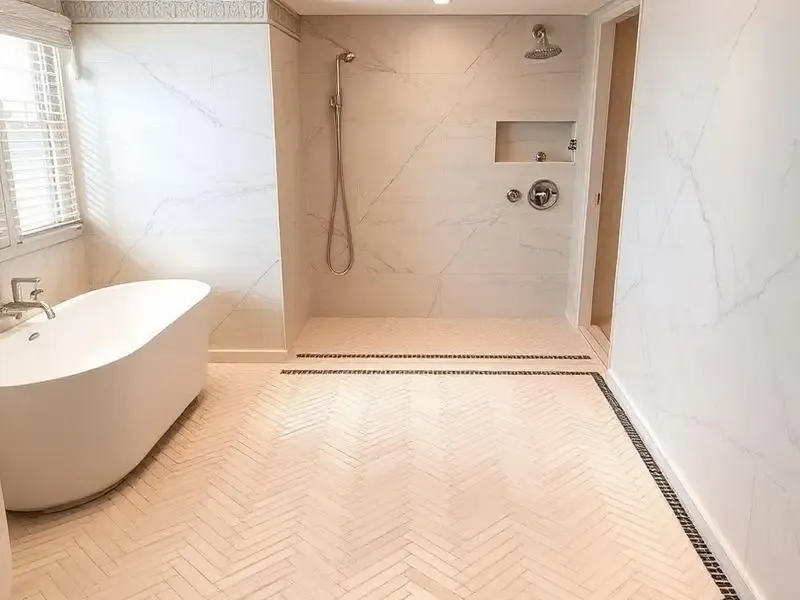
| Luxury or curbless | $20,000 to $35,000+ | Curbless entry, linear drain, floor-to-ceiling tile, rain head and handheld |
What raises the cost: moving the drain to a new location, going curbless (on a concrete slab this means cutting the slab to recess the shower floor), rotted subfloor or framing, custom glass panels and natural stone. For the full room, see our guide to kitchen and bath project costs and our bathroom remodeling services.
Walk-in shower conversion step by step
- Design and selections. Size, curb or curbless, tile, niche, glass and fixtures. Ordering everything before demolition prevents long pauses mid-project.
- Demolition. The tub, surround and drywall come out, the area is protected and debris is hauled away.
- Plumbing and framing. New valve, shower head location, drain upsizing, blocking for grab bars and glass, and any repairs to rotted framing.
- Shower pan and waterproofing. The floor is sloped about 1/4 inch per foot toward the drain, then the pan and walls are sealed with a membrane system such as Schluter-KERDI or a liquid membrane like RedGard. A flood test confirms it holds water before tile.
- Tile. Walls, floor and niche are set, grouted and cured. Large-format porcelain means fewer grout lines to clean.
- Glass and fixtures. Custom glass is measured after tile is finished, then installed with trim, accessories and silicone.
- Final walkthrough. We test everything with you and explain care for the grout and glass.
Design choices that matter
Curbless or low curb?
A curbless shower has no step at all, which is ideal for aging in place and looks great with one continuous floor tile. In most Florida homes built on a concrete slab, it requires cutting the slab to recess the pan, so it costs more and takes longer. A low curb of 2 to 4 inches gives most of the look for less.
Glass enclosure
Frameless 3/8-inch tempered glass is the most popular choice. A fixed panel without a door works in larger showers and has nothing to break. All shower glass must be safety glazing under the Florida Building Code.
Tile, niche and bench
Porcelain is the workhorse of Florida bathrooms: dense, nearly waterproof and available in marble and wood looks. Plan a recessed niche instead of a hanging caddy and consider a bench or fold-down seat. Our tile installation page shows recent showers.
Waterproofing for Florida humidity
Tile and grout are not waterproof. The membrane behind them is what protects your walls and subfloor. In Jacksonville's humidity, a shower without a continuous membrane can look fine for a year and then show soft drywall, a musty smell or mold around the baseboard. Ask every contractor exactly which waterproofing system they use, whether they flood-test the pan, and whether the bathroom exhaust fan is sized for the room. A quiet fan vented outside, not into the attic, is one of the cheapest ways to protect a new shower.
How long does a tub-to-shower conversion take?
A straightforward conversion in an existing alcove usually takes 1 to 2 weeks of work, and a full bathroom remodel takes 2 to 4 weeks. The longest wait is often the custom glass, which is measured after tile and typically arrives 1 to 2 weeks later. Our bathroom remodel timeline guide breaks down every phase.

A licensed and insured general contractor based in Jacksonville, FL. Our own in-house crew remodels kitchens, bathrooms, floors, patios and decks across Duval, St. Johns, Clay and Nassau counties, with free written estimates and 10% off your first service. Meet the team.